
Luxury and Heat: Protecting Your Jaguar’s Supercharged Engine from Climate Strain
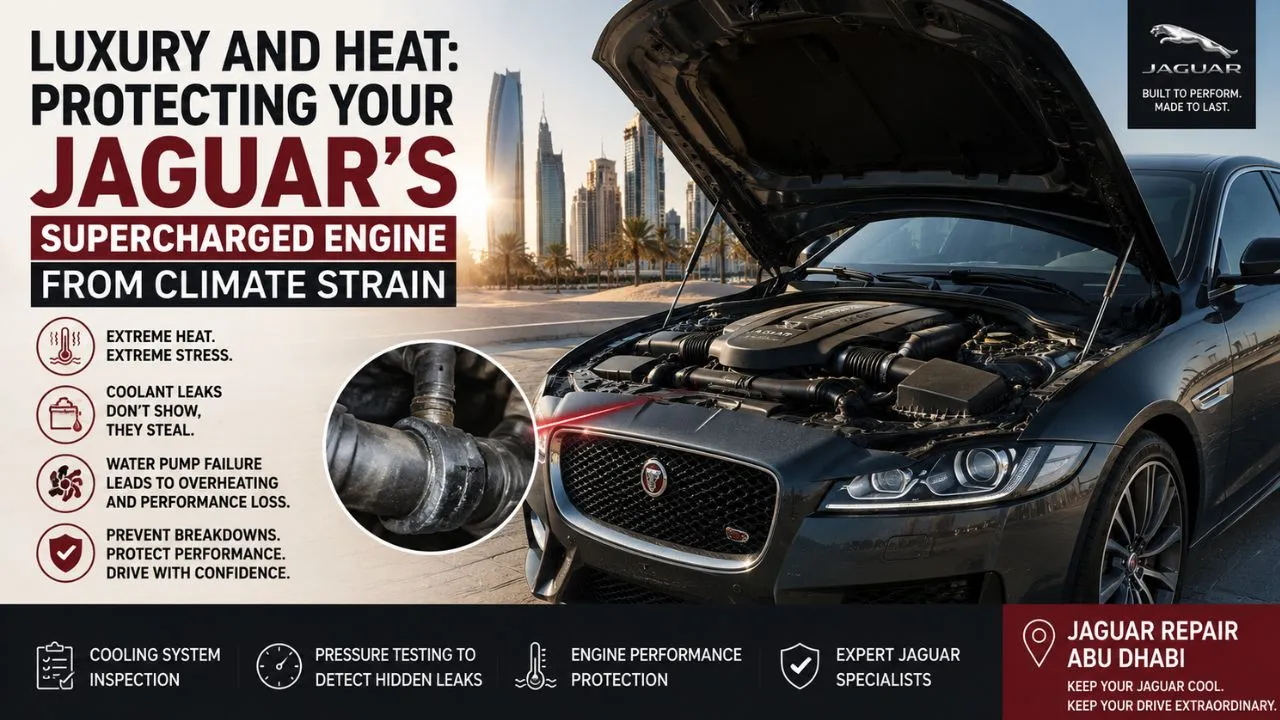
Driving a Jaguar is an experience defined by refined British luxury and effortless, supercharged performance. However, when the intense local summer heat arrives, it places an extraordinary amount of thermal stress on these finely tuned machines.
High-performance engines operate under immense internal pressures, and extreme ambient temperatures force your cooling system to work at its absolute limit.
Neglecting the early signs of climate strain can quickly lead to severe performance lag or permanent engine damage. Securing reliable, factory-grade jaguar repair abu dhabi during the initial signs of trouble is essential for safeguarding your vehicle’s long-term health and maintaining its signature performance.
To keep your vehicle running smoothly through the harshest months of the year, it helps to understand the specific high-wear cooling components that require proactive attention. Jaguar models—especially those equipped with supercharged V6 or V8 engines—utilize complex thermal management networks that are highly sensitive to extreme environmental heat.
The Vulnerability of Plastic Coolant Pipes
One of the most common issues in modern performance engines is the gradual breakdown of internal plastic plumbing. Jaguar utilizes a series of molded plastic coolant crossover pipes located beneath the supercharger assembly to route fluid through the engine block.
- The Heat Cycle Effect: The combination of intense engine bay heat and hot coolant causes these plastic pipes to become brittle over time.
- The Risk: Eventually, hair-line cracks develop along the molded seams. Because these leaks often drip directly onto the hot engine block and evaporate immediately, you might not see a puddle on your driveway. Instead, the first warning sign is often a sudden “low coolant” alert on your dashboard.
Water Pump Longevity and Performance Lag
The water pump is the mechanical heart of your vehicle’s cooling system, responsible for constantly circulating fluid to dissipate internal thermal energy.
- Bearing Wear: The extreme demands of driving in a scorching climate accelerate the wear on the internal water pump bearings and seals. If the pump begins to fail, its efficiency drops, causing engine temperatures to spike during stop-and-go city driving.
- Supercharger Intercooler Efficiency: Supercharged Jaguars rely on a dedicated secondary cooling circuit with an electric charge-cooler pump to lower the temperature of the air entering the engine. If this auxiliary system struggles, the engine management computer will intentionally pull back power to prevent detonation, resulting in a sudden, noticeable performance lag when you step on the accelerator.
Prevent Roadside Breakdowns with Pressure Testing
Waiting for your temperature gauge to climb into the red before seeking professional help is a high-risk gamble. Severe overheating can easily warp aluminum cylinder heads, blow head gaskets, and turn a simple maintenance task into an incredibly expensive engine rebuild.
The most effective way to protect your vehicle from a catastrophic roadside breakdown is to schedule a proactive cooling system inspection. Professional technicians use specialized pressure-testing equipment to pressurize the entire cooling loop while the engine is cold. This process exposes hidden hairline cracks, failing hose clamps, and weak water pump seals before they can fail under pressure on the highway.
Don’t let extreme climate strain compromise your driving experience. By visiting alzaabiautocare.com, you can connect with a certified jaguar repair specialist who possesses the advanced diagnostic tools and specific model expertise required to keep your luxury vehicle running cool, responsive, and completely reliable all year long.